Tuesday, June 9, 2015

Hashtags Aren’t Gimmicks: How Buffer’s Twitter Chat Reached 49,993,695 People in One Year

Normally, when we think about how we can use hashtags effectively, we think of creating viral hashtag campaigns for our business or website.

The problem with the way most people think about hashtags is that it is limiting. When you use hashtags in the normal way, you look for ways your audience can interact with you. Maybe you encourage them to use your hashtag for the chance to win prizes. Maybe you start a hashtag campaign in the hope it goes viral and attracts new customers.

If you are only looking for ways your audience can interact with you, you are missing out on crucial opportunities. You can interact with them. Hashtags are not a one-way street.

Today, you’re going to learn how Buffer used a hashtag to reach over 49,993,695 people in one year, as well as what other small businesses are doing to harness the power of the hashtag.

Buffer uses their hashtag #bufferchat each Wednesday to give back and engage with their audience. Each week people follow the hashtag and answer questions on a chosen topic set by Buffer themselves, or an invited host.

Twitter chats are a perfect way to show your audience you are listening. It’s a way to understand your audience and find out what it is they want to know. It’s a way for your audience to ask you questions and get answers.

When people engage in a Twitter chat, their followers can see the tweets. This results in a much wider reach. Below, you will be able to see the reach Buffer has achieved in the past year to date.

  • 113,658 Tweets
  • 8,170 Contributors
  • Total Reach: 49,993,695

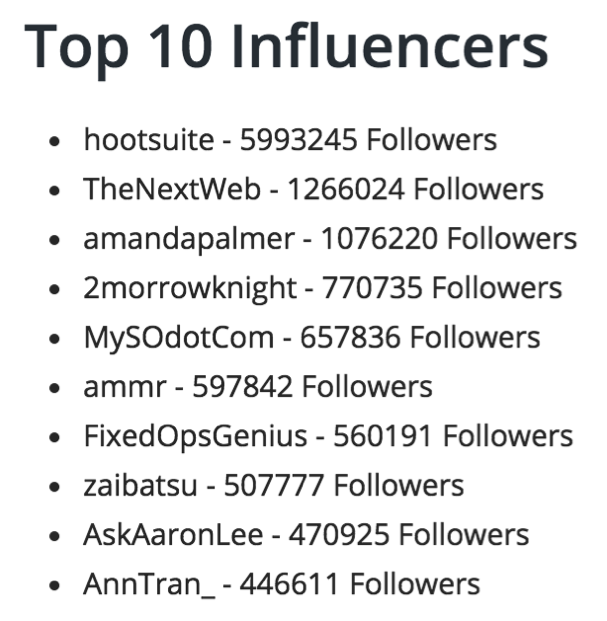
In terms of their influencers, Bufferchat paves the way. They have all sorts of people interacting with their chat. Just look at the number of followers of their influencers:

top-10-influencers

What more could a brand want than people talking about it regularly? Here are collated statistics from Bufferchat mentions over the past year:

top-10-contributors

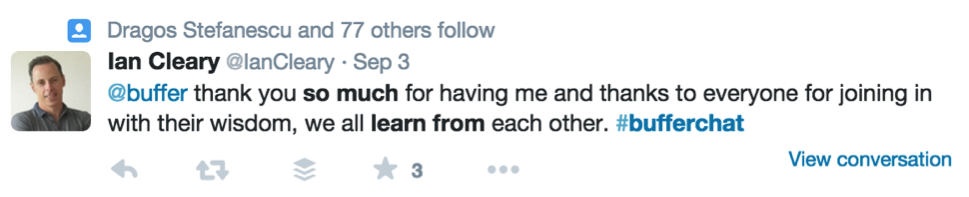
Use your hashtag to give back. If you’re going to create a Twitter chat, don’t make it about you. Make it something people can learn from.

ian-cleary-tweet

natasha-tweet

juliet-chen-tweet

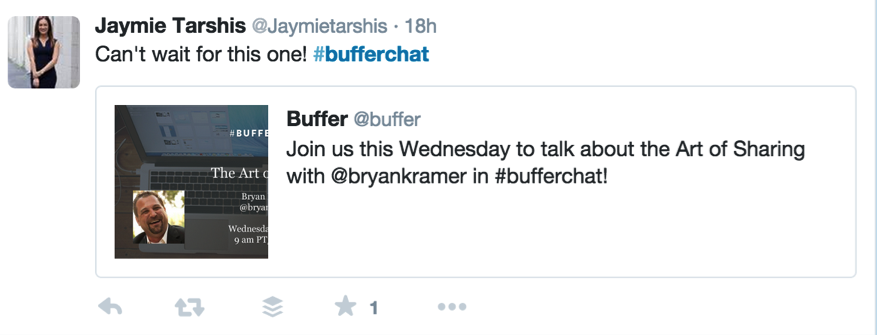
If people feel they have learned from your Twitter chat, they’re going to come back. You’ll even have people excited about the chat days before it happens. You’ll see something like this:

jaymie-tarshis-tweet

When you give back to your audience using a hashtag, you can expect unprecedented responses. This isn’t just something only Buffer does. Lots of other companies do it, too. In fact, you are missing out if you don’t.

Use Hashtags to Create Connections

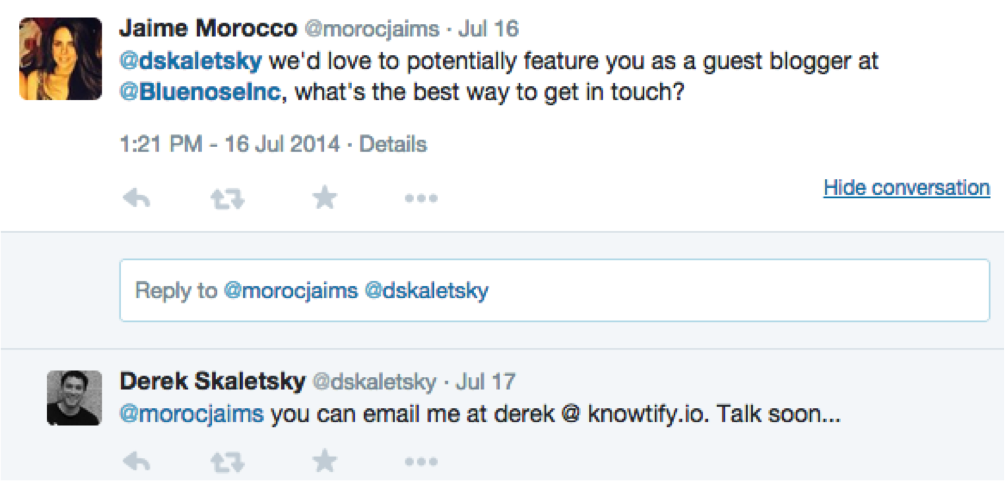
If you’re looking to find people to connect with, use hashtags. Bluenose.com, a customer success platform, does this well. They use Twitter as a way to source guest bloggers. For example, they monitored hashtags like “#customersuccess” and found Derek Skaletsky, the CEO of a new SaaS company called Knowtify.

The Twitter conversation led to an excellent blog post that was great for both parties, but it didn’t end there. That blog was utilized in multiple email drip campaigns, and they also had Skaletsky as a guest speaker during one of their Customer Success Supper Club Meetups.

jaime-morocco-tweet

Use Hashtags to Find Content Ideas Your Audience Is Looking For

People often complain they don’t know what content to write, or they are not sure people will want to read their content.

As with any idea, you need to validate it. You need to validate that your business idea will work before you start it. You need to validate the need for your content before you create it.

Twitter is a great way to validate blog ideas, and you can use hashtags to do so.

Suppose you are on a beach and it’s a really hot day. Would you want to walk around for an hour looking for water, or would you rather someone bring water to you the moment you are thirsty? My guess is the second option. If someone gave you exactly what you wanted when you wanted it, you’d be pretty grateful.

So, use hashtags as a search feature. Find content that people are looking for and create it. When you create the solution to someone’s problem, they’re going to be grateful.

A key point here is that people are lazy. Instead of doing a Google search to look for information, people will take to Twitter and ask their followers to do the work for them. If you don’t believe me, let’s see for ourselves.

Pick a topic in your niche you think people will talk about and search for it using a hashtag. In the examples below, I am looking for people who are talking about marketing. I have used #marketing.

Key tip: If you want to narrow your search, try adding words like “opinion” or “?”. This narrows the search to people who have used these words and the hashtag.

hashtag-marketing-opinion

white-dot-net-tweet

Normally, people might tweet about marketing and add #marketing at the end of their tweet in the hope someone will reply. This usually only works if you have a big following or are an industry leader.

Now, instead of including #marketing on one of your tweets, use the hashtag to search for other people using #marketing, and then create content in response to that.

Twitter users, like the ones above, are already engaging in the hashtag, so really, you don’t have to. If marketing is what you are targeting, you have to find these people and interact with them. The tweets above present opportunity to create content. People are looking for answers and you are there to provide them.

IIM-calcutta-tweet

Give them what they want. If you reply to the Twitter user above with a blog post called “Quality content: The most vital part of marketing,” they’re likely to read it, right?

It’s exactly what they’re looking for. They will probably follow you, and perhaps if your content is good enough, they may share it, too.

Here you have used hashtags not for your own benefit, but for the benefit of other people. You have helped someone out, and they will reward you by reading your content. This in turn helps you position yourself as an authority. The next time this particular person has a question, they may come directly to you.

Use Hashtags to Interact with People Interested in Your Product/Service

Outreach is a key part of many marketing plans. Ideally, you want as many people as possible to know about your offering. Reaching out via Twitter is a key way to approach it.

Suppose you created a piece of software similar to Google Analytics. You could, as some people suggest, search for your product name to see if people are talking about you. This is a good way to interact with people, definitely. But what if they’re not talking about you? What if you search for your company name and the only tweets talking about you are the ones you’ve sent?

With this method, again, the purpose is to bring value to your audience rather than seek value for you.

Take your software, product, or service and write a list of all the keywords associated with it.

esther-tweet

For our software example, we might search for #analytics.

Key tip: Do not use this method as a tool to plug your product/service to everyone you can. Try to add value.

Remember, it’s all about being useful to people. If someone asks a question about analytics, answer it.

This user wants an e-course for Twitter analytics. If you make one, she’s very likely to use it and then potentially check out your product, too.

One company that does this well is Senior Carebox, a subscription care box service for senior loved ones.

I spoke to Kyle Ems, the founder, to find out how he uses hashtags to help his business.

“I search for hashtags that identify potential customers. For example, our care boxes are sent to senior loved ones, but are usually purchased by their daughter, son, friend, or primary care provider.

“If I search for hashtags such as #grandma, #grandparents, #grandpa, or #family, I can easily identify potential buyers. As I retweet or favorite more tweets that include these hashtags, I see more traffic. Also, I include these hashtags in our tweets so potential customers can find us.”

I asked him about the results of his method. Please see response below:

kyle-email

Don’t Try to Get Your Hashtag Trending

Whenever I go through a client’s social media plans, specifically their approach to Twitter, one of their goals is usually to create a trending hashtag in order to bring in new customers. While this is an okay goal, and I understand why you might want to do it, the problem is that creating a trending hashtag is hard work and quite unrealistic. There is a much easier method.

With this method, you engage with hashtags that are already trending. Provided they are relevant to your industry, there is potential for you to do very well through this method.

The idea is to interact with a hashtag that’s already gaining traffic and use it to your advantage. If the hashtag is relevant to you, your content might be relevant to those using it.

lego-batman-tweet

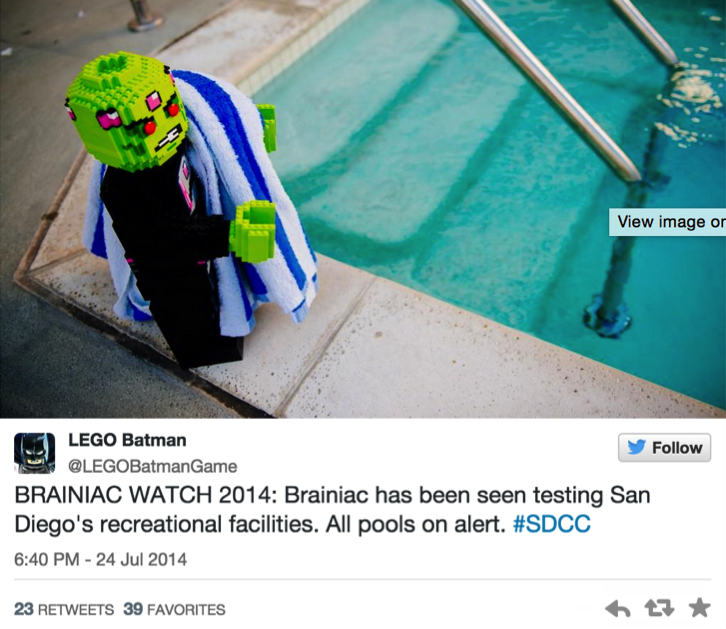
LEGO Batman is a great example of this. They wanted to promote their new brand. When they saw the San Diego Comic-Con was trending, they used this to their advantage. They knew this was relevant to them, so they interacted, using the #SDCC hashtag. They didn’t need to create their own hashtag; they didn’t need that much preparation; and they were clever and made sure they were in the right place at the right time.

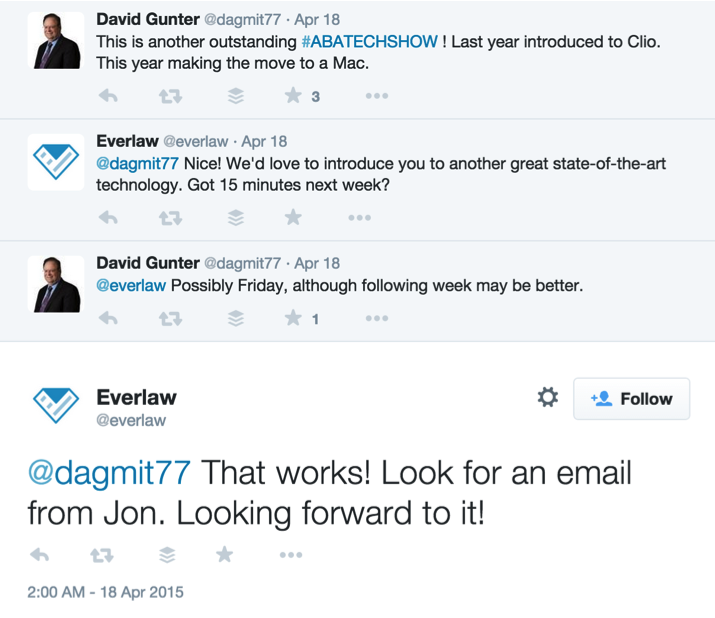
Another company that did this well was small business Everlaw, which utilized a trending hashtag in order to promote their new product.

david-grunter-tweet

Hashtags are important, and they are here to stay, at least for the foreseeable future. Don’t limit yourself by using hashtags and waiting for people to come to you. Go to them. Instead of using hashtags as a self-promotion tool, use them to engage with your audience and listen to them. Sooner rather than later, you will have people promoting for you.

About the Author: Jordie Black is a Copywriter and Web-Copy Consultant specializing in Conversion Rate Optimization. Her mission is to help people like you produce better, believable copy that converts. Get her free 4-part blogging course and learn how to use Twitter to write better blogs.

Sunday, June 7, 2015

west palm beach digital marketing

west palm beach digital marketing
west palm beach seo

Optimize Reach is a refreshingly different SEO company located in West Palm Beach Florida. We specialize in digital marketing that utilizes advanced marketing tactics designed to produce maximum return on investment (ROI).

Our pay per lead campaigns are guaranteed to send you qualified leads through direct phone calls or emails/website submissions or you will not be charged for the leads.

No risk: Each new lead is tracked with advanced analytic software, if you receive a wrong number or the lead turns out to be a sales call then you will NOT be charged for the call. Its’ that simple.

No contracts: We don’t believe in contracts, we believe in earning your business and eventually your trust. If at any time you feel you are not receiving the level of service or quality leads that you expected you can simply let us know and cancel at any time.

When you’ve been producing results with triple digit ROI like we have we don’t worry about our customers leaving. We focus on driving their ROI even higher. At the end of the day we grow when you grow. Our business, is growing yours.

Every marketing campaign is deployed with advanced analytic tracking. Every click and every call is thoroughly reported. This allows us to know exactly what marketing campaigns worked and what didn't work, allowing us to tweak what isn't working and maximize our marketing budget.

This ensures that every advertising dollar is recorded and measured. This allows us to optimize and maximize our efforts on traffic platforms that are working, and reduce our efforts on campaigns that are producing a low ROI, allowing us to reallocate those funds to what is working.

Our west Palm Beach SEO and online marketing techniques begin by analyzing your current website from the marketing perspective to find answers to questions like: How many visitors come to your site? What is the real goal of your website? What sources and devices do they come from? This will allow us to optimize your website to fulfill its real purpose.

Second, search engine optimization will definitely follow. So we will take a look at what keywords are tied to your business. What links point to your site? And most importantly what can we do with your actual website content?

This type of SEO should get you better positions on search engines results page (Google, Bing, Yahoo). Pay Per Click campaigns are another way we can help boost your business. These Paid online campaigns can help you get more attention in search results, even on competitive keywords. PPC can be easily measured, and are also flexible; we can start them today, and if you want, stop them tomorrow.

Another great way to make you more visible to the outer world is to start being active on social media. We will choose only the networks suitable for your business, develop a custom strategy to meet your fans, and monitor and maintain a good reputation of your company.

Finally, we can also consider other marketing channels and techniques, like email marketing, mobile marketing campaigns, or traditional offline channels like direct mail.

Still have questions to ask? Or you want to know how our strategies can help your specific business requirements? Just contact us, we help companies and individuals just like you, every day.

Other searches that helped you find this video:
Digital Marketing-Internet Marketing-Social Media Marketing-Pay Per Click campaign management

Follow us on Twitter: https://twitter.com/OptimizeReach
More information about Digital Marketing visit: http://en.wikipedia.org/wiki/Digital_marketing

Wednesday, June 3, 2015

A Page from Airbnb’s Email Marketing Playbook [PODCAST]

bloginpost

In this episode of the Call to Action podcast, we have a story of how a clever blog post title halved our open rates. Then, we break down some email marketing tactics that Jimmy Daly, Head of Content at Vero, borrows from the likes of Airbnb, TripAdvisor and Uber.

Listen to the podcast


Listen on iTunes.
Prefer Stitcher? We got your back.

Mentioned in the podcast

Read the transcript

In this episode: Dan Levy, Unbounce’s Content Strategist, interviews Vero’s Head of Content, Jimmy Daly.

Dan Levy: It’s hard to know where to start when talking about email because it’s involved in so many aspects of marketing. So what do you mean by behavioral emails, and where do those fit into the funnel?

Jimmy Daly: Okay. That’s a good question, and a good place to start. So a behavioral email is, in the simplest terms, one that is sent to an audience of one. And what I mean by that is an email that is triggered based on a behavior, as the name suggests, and triggered for a very specific purpose. So the idea would be that you’re able to tie specific behavior by your customers or users to very specific next steps that you want them to take. So a great example would be like a welcome email. Someone signs up for you newsletter or your product, and you trigger a welcome email, and you ask them to take the next step.

So behavioral emails work best in a series where you’re sort of stringing people along from one step to the next until you get them to an ultimate goal. And in terms of where they fit in the funnel, they kind of fit anywhere as soon as you have their email address. So in order to track the behavior, you obviously need to be able to identify people. So once you have that email address, once they’re signed up for your product, once they have made their first purchase or subscribed to the blog, you can start tracking that behavior, and you can start triggering these automated behavioral emails.

Dan Levy: So we’re not necessarily talking about existing like paying customers. We’re talking, essentially, about subscribers.

Jimmy Daly: Well, both, really. So if you’re talking about customers, and you’re talking about ecommerce, there’s all kinds of ways to trigger behavioral emails that can help you with upsells, that can help you with replenishment. So if there’s a product we sell that is gonna run out and people need to reorder, that’s a great way to use them. But behavioral emails also encompass lifecycle email, which is obviously a really big picture marketing strategy, but the idea is just that you’re keeping your customers, your users, your subscribers engaged over a long period of time.

Dan Levy: Right. Well, I want to come back to lifecycle emails a bit later. But first, a big chunk of your post talks about ways to engage inactive subscribers on your list with what you call targeted retention emails. How do you do that without bugging people who just aren’t that into you?

Jimmy Daly: Well, with all email marketing, you have to be careful not to over send. The inbox is a noisy place, and ultimately, people just don’t have time to sort through all of your marketing messages. So the first thing I would say is to let your data guide you. And if people really are inactive, and they really are making it clear they don’t want your emails, just stop sending them.

Dan Levy: Leave them alone.

Jimmy Daly:  Exactly. But there’s some great ways to send really targeted retention emails depending on how inactive people really are. So in the post, I broke it down into three types of inactivity: initial inactivity, partial inactivity, and complete inactivity. So with initial inactivity, say someone signs up for your product, and they took the first step, which maybe was completing their profile, but haven’t taken the second step, which maybe is testing your primary feature, that’s initial inactivity. They’re obviously interested, so you need to get them in and get them moving before you lose them. And so it gets a little less specific as the inactivity grows. So by the time you get to complete inactivity, you don’t have a lot of data to tell you why these people aren’t engaged with your product or your service, and you have to start putting on your customer cap to figure out where their challenges are, where their pain points are, so you can help solve that for them.

Dan Levy: Yeah. We used to like to think of emails sort of like campaign landing pages, in that they have one particular goal, one call to action. But you put forward that in some cases, it’s actually okay to cast your net a little bit wider. Is that what you’re talking about here?

Jimmy Daly: Yeah, exactly. So by the time someone goes completely inactive, you really don’t have much to lose. Because if you do nothing, you will get nothing. They’re not gonna just magically reappear and become a paying customer. So yeah. It’s okay to cast your net far and wide because you don’t know what their pain points are. You don’t know why they became inactive. So that’s one of the few cases where it’s okay to cast that net very far and very wide.

Dan Levy: So let’s talk about another type of email, a transactional email, which you say are a totally underrated strategy for turning peoples’ attention into action. What are transactional emails, and what’s the opportunity here?

Jimmy Daly:  So a transactional email is not a marketing email. So we’re talking about receipts, invoices, monthly reports, things like this. What we have found is that these emails get opened at up to eight times the rate as your sort of traditional newsletters or promotional emails. So that’s a real opportunity. There’s a fine line you have to walk between delivering whatever that transactional information is and crossing the boundary into marketing, because you’re technically not allowed to do that, because transactional emails are not required to have an unsubscribe button. So what we recommend is – receipts are a great example. Like most receipts are really bland. It’s just, here’s how much you paid. That’s it.

But there’s an opportunity there to make those emails look really good, or to include a link in the bottom to your blog. And those types of small wins are something that we’re a big fan of at Vero because one of the foundations of lifecycle marketing is moving people through your funnel with small wins. So any opportunity you have, and any attention that you have, you should be doing something, just something, to keep people moving through that funnel.

Dan Levy: Could you give some examples of companies who have successfully turned their transactional emails into quasi-marketing channels?

Jimmy Daly: Yeah, sure. So there’s a couple that I talk about on the Vero blog pretty regularly. Uber is probably my favorite. So Uber receipts are incredible. They include so much personalized data, and so much context that you actually – when you get that email, you read through it. And you see what time did the driver pick you up. Here’s the exact route you took. How much did it cost. What was the driver’s name. How many stars did they have. All this information. And then at the bottom, there’s also a referral code. And so that’s the type of small win we’re talking about. If I pass that referral code on to a new customer, I get something, and they get something. And that’s the easiest way for Uber to get into my inbox and get my attention. And so there’s nothing for them to lose by having that referral code in there.

Dan Levy: Another type of email you delve into is the hail mary email, which are kind of last ditch efforts to engage an inactive lead, or perhaps a customer whose free trial period is about to end. I like to think of these as like nothing to lose emails, but do you really have nothing to lose? What about your dignity?

Jimmy Daly: Well, that’s a good question. I would advise people not to turn to the spray and pray method, where you’re just like blasting emails out with no real call to action. You’re not really sure what you’re asking them to do. But here’s the thing about hail mary emails. So say someone signs up for your free trial, and it’s 14 days. That’s kind of an arbitrary number, and there’s a lot else going on in your customer’s lives. So if they don’t have time to really test your software in 14 days, they’re not gonna be come a paying customer. So you need to approach it with some class, and it’s good to address pain points specifically. So in the case of a 14-day trial, you can approach the email like, “Hey, we know you might not have had enough time to check it out. Would you like an extension of your free trial?” That’s a good way to approach that, and like you said, there’s nothing to lose.

Dan Levy: That could be tricky though, right? Because often, a company’s free trial period or their onboarding process is calibrated over a certain amount of days. So how do you extend their trial while still successfully onboarding them in a way that makes sense?

Jimmy Daly: Sure. So one strategy you might consider for that is sending plain text emails directly from your founder. And the reason those work is because, one, they don’t look like marketing emails, and two, it’s a way for business owners to talk the same language with each other. And we’ve found that to be a really effective way to reengage people. So instead of asking them to click here to extend your trial, you can just put it out there, and just say hey, I know how this works. I run a business too. I’m super busy. Do you want a free trial? Is there anything you hated about our software? Just reply and let me know. And asking someone to reply as opposed to click starts a conversation, and it’s a good chance to learn what happened, what went wrong, and what you can do to fix it.

Dan Levy: Interesting. So you’re not just extending the onboarding emails that you’ve already been sending, but you’re kind of changing the tone of the conversation.

Jimmy Daly: Totally. And you can automate that.

Dan Levy: That’s always a plus. So it turns out you guys were once converted by a hail mary email. Can you talk about what that email looked like, and why it worked for you?

Jimmy Daly: Yeah, so this is actually – this is how we became such fans of hail mary emails. We were looking for help desk software, and we did a free trial with Help Scout. It was 14 days. We just didn’t have enough time to really test it out. And they, I assume, automatically triggered this email to us that just said basically exactly what I just described: hey, you might not have had enough time. Would you like an extension? And that was – the only other thing that was included in that email was a testimonial. The message was very clear. The call to action was clear, and there was a real value proposition in that email. And it worked. We became customers after that.

Dan Levy: Wow. And I guess that testimonial really spoke to you as a company. Like it was the right testimonial.

Jimmy Daly: Definitely, definitely. It definitely resonated with us. And I actually included that example in the post, too.

Dan Levy: So that’s a great story. But another great way to avoid sending a hail mary email in the first place is just to keep subscribers active so you don’t have to do that. You suggest one way to do that is through lifecycle emails. What are those?

Jimmy Daly: So a lifecycle email is one designed to net a small win. So too often, people think of email marketing as a channel for conversion. And it is, but it’s not – there’s a tipping point. So the idea would be that you get people interested, you net a series of small wins, and then you reach a goal at the end, rather than you send one blast promotional email, and people start paying you money. That’s just not really how it works. So lifecycle emails are letting people know about new features you have, or another lifecycle email that we’re a big fan of, we call milestone emails. So that’s rewarding people for good behavior.

So Canva sends great milestone emails. They’re a tool that lets you design little images and graphics for your social media and for your blog. And so they send these milestone emails. Once you’ve created ten designs, you get a silver badge. And then once you create, I think it’s 20 or 25, you get a gold badge. So they’re rewarding good behavior as a way to encourage you to continue using the service. So I’m already an engaged user, and they’re trying to double down on that by getting me even more engaged.

Dan Levy: Nice, so they’re not waiting until you’re inactive or you’re about to slip away. They’re being more proactive about it, really.

Jimmy Daly: Exactly, exactly. TripAdvisor does a great job of this also. So every time you write a review, they’ll email you and say, “Hey, thanks so much for writing a review. Here’s a few other places, similar restaurants or hotels, or nearby hotels or restaurants or whatever. Have you been to any of these, and would you consider writing a review for them also?” So it’s a way to build on momentum.

Dan Levy: Something that we often talk about in the context of search marketing is intent, which means understanding what brought your prospects to you in the first place, and catering your marketing accordingly. That seems to me to be a little bit more complicated when it comes to email marketing. But you give an example of how Airbnb sends emails based on peoples’ browsing history. Can you talk about that?

Jimmy Daly: Yeah, sure. So I wrote about this on the Vero blog as one of the best behavioral emails I’ve ever seen. And so how it works is I go onto Airbnb, and I’m looking at a listing in Portland, Oregon. And I sort of kick around. I find one that I like, I sort of look at the pictures, I read the reviews, but ultimately, I don’t book. 24 hours later, Airbnb triggers an email to me featuring that exact listing, as well as others in the same area and in the same price range. So basically what they’ve done is sent an abandoned shopping cart email one step earlier in the funnel. So it’s clear to them that my intent is to travel to Portland. They want to make sure they get to me before I go and book a hotel, for example. So it’s a really powerful email. They just do so many things right in terms of copywriting, design, responsiveness. It’s really – they do a great job with it.

Dan Levy: Is that something that you think more marketers could take advantage of, really drilling down to like a subscriber’s intent?

Jimmy Daly: Absolutely. I mean, if you’re sending any type of marketing emails, you are able to collect data about peoples’ intent. And so that can be as simple as what blog post they read, if they’re clicking through in a newsletter, or it can be as sophisticated as what pages they view on your ecommerce site. We hear often from people that, well, Airbnb can do this, and TripAdvisor can do this because they have huge marketing budgets and big teams. But it’s actually not that complicated. Like if you think about the email that Airbnb sent, they’re just basically – they’ve written a very simple email, and they have placeholders that they can fill in based on that customer’s data and their browsing history. So it’s a big effort once to create the template for that, but it triggers over and over and over again, and every email that is sent is totally personalized to the person it’s being sent to. So it doesn’t actually cost that much money. The time investment is minimal, and you can get a huge ROI on these emails.

Dan Levy: Right. One of the most tried and true email marketing techniques is personalization, which at the most basic level, means including someone’s name in your subject line or your greeting, as in, “Hi, Jimmy.” Dot dot dot. I was surprised to learn that 70 percent of brands don’t actually do this. Why do you think that is?

Jimmy Daly: That’s really interesting. The answer truly is, I don’t know. I think that in some cases because the people handling the email marketing just aren’t technical, and they don’t feel comfortable doing that. I think in other cases, the time and attention that is designated to email marketing goes into things like design as opposed to cost action and copy. But it’s really – using liquid templates, it’s really easy to do. Pretty much every email marketing provider offers that. It’s a really – for marketers, it’s an easy and small win, and everybody should be doing that.

Dan Levy: Totally. What are some other ways to personalize emails beyond “Hi Jimmy”?

Jimmy Daly: Well, there’s a whole range of personalization. So putting someone’s first name in the subject line is sort of on the low end. And then on the high end, you have emails like Airbnb sends that are personalized based on browsing history, geo-location, price range, and other things. And then there’s everything in between also. So simple ways would be sending emails with recommended products, sending emails based not just on time, like a typical auto-responder, but based on behavior. So for example, when someone take the first step in your onboarding, but doesn’t take the second step, if you trigger an email based on that – I mean, that’s personalization. So it’s not just about the content of the email; it’s about the context as well.

Dan Levy: Right, right. So I like to usually end these interviews on a super actionable tip. But I want to get to something maybe a little bit more philosophical, but just as important. You write in your article that this is all not just about retaining subscribers or customers, but really about making them happy or providing a great experience. How do you do that, and why do you think more marketers don’t seem to feel this way?

Jimmy Daly: Well, I think that most marketers do want to give their customers and their subscribers a good experience, but I think that too many get hung up on data. And so, they’re only using open and click rates to guide their marketing. And that’s shortsighted. So a long-term email marketing strategy could potentially result in a lower click rate or a lower open rate initially. But if you’re really dedicated to building a great experience, that’s okay. And it could also mean fewer emails. So like one way to give people a great email experience is to unsubscribe them from your emails, and that’s really hard to do. And so that’s probably one reason that people don’t do it.

Dan Levy: And of course, that’s probably actually going to give you better open and click-through rates. So providing a great experience and improving your data aren’t necessarily mutually exclusive, are they?

Jimmy Daly: No, that’s very true.

Dan Levy: So where’s the best place to start if marketers want to take advantage of their behavioral emails?

Jimmy Daly: Well, I think the first place that any marketer should start is with a great welcome email. So it’s not sophisticated to send. It sets the tone for the entire customer or subscriber experience with your emails, and it’s the best place to build on momentum from the signup. So a great welcome email not only introduces you and your business to your new subscriber, but it also moves them to the next step. This should be the primary goal of a welcome email. It is to build on momentum, and net your first small win. So I think that’s a great place to start. After that, committing to just one behavioral email is an incredible way to get real ROI from your email.

So if you think about how people send promotional emails and newsletters, they’re creating them all the time, maybe one or two every week, and sending them over and over and over again. But if you create just one behavioral email, and you just do it one time, and you set up your triggers properly, and you automate it, it’s gonna work by itself forever. It’s gonna be personalized and contextual, and it’s gonna convert way more people than those promotional emails that you’re creating all the time as well. And so that would be my best advice for getting started.

Dan Levy: That makes a lot of sense to me. Starting at the very beginning with the welcome.

Jimmy Daly: Yup, exactly.

Dan Levy: All righty. I think that’s a good note to end on. Thanks so much for taking the time to chat, Jimmy.

Jimmy Daly: Cool. Thanks so much for having me, Dan.

Transcript by GMR Transcription


A Foolproof Method for Creating Content That Converts

create-amazing-content-650
Get to work on your next content masterpiece. Image source.

When your content is mediocre, it’s nearly impossible to get people to pay attention.

But when your content is amazing, it’s easy to promote it. It’s easy to drive traffic. And it’s much easier to pull in qualified leads.

To create amazing content, we’re going to steal a technique from Brian Dean.

It’s called the Skyscraper Technique, and it’s based around creating content so valuable that it “towers” above your competitor’s content – hence the name.

This is what gives your content a competitive edge, making it easier to get social shares and backlinks.

The technique involves three main steps:

  1. Find content that’s already proven to get social shares and backlinks
  2. Publish content that’s better than anything else out there on that topic
  3. Promote it to drive traffic and capture leads.

Simple enough? Let’s break it down.

1. Find content that is proven to perform well

To find content that is tried-and-true, we’re going to start with a tool called Buzzsumo.

Buzzsumo is a search engine that finds the most highly shared content for any given search term. It even provides the exact number of shares per article on each of the major social media networks.

Here’s an example:

If I do a search for “landing page design”…

Buzzsumo 1

… Buzzsumo pulls up all of the landing page design articles with the most social shares:

Buzzsumo 2
Buzzsumo 3

If the most shared articles on a topic have a lot of social shares (in the ballpark of 500+), that topic is proven to be popular. This means that if you create a piece of content on that topic, it’s already predestined to get social shares.

So here’s what you’re going to do:

First, do a search on Buzzsumo for a topic you would like to write about. If the top articles have received a good amount of social shares, make a list of the most shared articles and read through each one.

As you’re reading, jot down two things:

  1. The information that is mentioned over and over again in each article. This is standard information on the topic. Therefore, it should not be left out of your content, otherwise your content will be incomplete.
  2. The crucial information that most of the articles are not addressing or are only touching on. This is one of the components that will set your content apart.

I prefer to keep track of this in a spreadsheet, like so:

Spreadsheet 1 2

Then gather data from Topsy

Next, we’re going to use another useful tool called Topsy.

Topsy is a search engine that shows you all of the top tweets for a given search term. You can also filter your searches by influencers, links, tweets, photos and videos.

Topsy 1

For example, if I do a search for “landing page design,” Topsy pulls up the top tweets within a specific date range:

Topsy 2

You’ll want to use Topsy to find all of the tweets related to your keyword. Then, you’ll want to see which related articles influencers are tweeting about. To do this, get another spreadsheet ready:

Spreadsheet 2

Search for articles that are getting a ton of tweets. Then, filter your search by “Influencers” to see what people with the largest social media followings are tweeting about. To do this:

  1. Use the sidebar option to filter by influencers.
Topsy 3
  1. Then click on the “Mentions” link below each influencer to see what content they’re sharing.
Topsy 4 Paint
  1. Grab those URLs as well, and jot down which influencers are sharing this content.
  2. Next, follow the same steps you did with the articles you found using Buzzsumo. Take note of 1) the information that’s mentioned over and over again and 2) the crucial information that is being left out or neglected.

Then grab some data from good ol’ Google

Finally, we want to find content that is proven to get backlinks and rank in Google. Get a third spreadsheet ready for this step and then:

  1. Type your keyword into Google and grab the URLs of the top 10-20 search results (skip Wikipedia pages and such).
  2. Plug each URL into a backlink checker, like Ahrefs or SEO Spyglass. Copy-paste each URL that has received a good amount of backlinks into your spreadsheet.

    Depending on your niche, this threshold could be over 10 backlinks – or it could be over 50. You can’t say without looking at it relatively. Look at how many backlinks the top ranking articles are getting, and compare those numbers to the lower ranking articles. This will give you an idea of what an impressive number of backlinks looks like.
  3. Lastly, go through each one and take note of the same two pieces of information you did with the previous articles.

And what are you left with?

By now, you know which types of articles are proven to get social shares, backlinks and rank in search engines.

But you also know:

  • What information must be included
  • Which information will set your content apart
  • What content the most influential people/companies are sharing on this topic (and who they are!)

Not bad. But now it’s time to make your content better than anything else out there.

2. Create amazing content that’s better than the rest

Since you read through all of the most shared articles, you have intimate knowledge of the best content on your chosen subject.

Now it’s time to make your content better. Your goal should be to create the number one resource for this information.

How do you do this?

Well, you have a number of options:

  1. Make it longer. As long as you’re making every word count, more information = more value. Longer content also gives off a higher perceived value, because it has a “wow factor” that makes people more likely to share it. For example, if most of the current articles give 5-10 tips, include 15-20 tips in your article, and you could induce that “wow factor.”

    In terms of ranking in Google, this study found that at least 1,500 words is a good starting point for ranking on the first page (and thus receiving more backlinks).

  2. Make it actionable. Think of your article as a dinner recipe. Give people step-by-step instructions on how to accomplish what you’re teaching.

    Link to tools and credible sources that will help them out. Give them everything they need to master the topic at hand. The more tangible value people get out of your content, the more likely they’ll be to share it on social media.

  3. Make it visual. Include screenshots, diagrams, pictures, and videos to help explain your topic. Not only does this make your content more useful, it can increase its perceived value as well.
  4. Make it user-friendly. Consider user experience as you create your content. Include in-text navigation links so people can jump from one section to another. Create a table of contents at the beginning of your content and a link within each section that brings people back to the top of the page. (Here’s a nifty guide for including in-text links.)

All of these things provide added value on top of the information you’re teaching people.

This makes your content more shareable and more linkable. And what do shares and links get you?

That’s right!

Traffic, subscribers and leads.

3. Promote your content to get social shares and drive traffic

Now that you’ve got so much awesome content, it’s time to push it out into the world. Here are four traffic generation channels you can try:

  1. Twitter
  2. Forum marketing
  3. Quora
  4. BuzzBundle

(Tactics for using these channels for lead gen are broken down – in detail – in my previous Unbounce article, A Step-by-Step Guide to Generating Leads with Your Content.)

These strategies will help you generate consistent traffic with your content. However, if you want big bursts of traffic, you need a little muscle play.

Now, if you don’t have a large social media following, email list, or high-powered connections, it can be tough to make this happen.

The solution is to harness the followings of other people, even if you don’t have a personal connection with them. All you need to do is reach out to social media influencers in your space and ask them to share your content with their followers.

I know. You’re not the asking type right? You’re used to making things happen under your own control? I’m the same way. But you’ve got to suck up your pride and nurture some humility, because you absolutely don’t want to miss out on the results this can bring you.

Reach out to influencers you’ve mentioned in the past

If you have included additional sources in your content, you’ve likely mentioned and linked to some of these influencers already.

Here’s an example from one of my articles:

Content Promotion 1

Go back through your content and find more places to naturally feature other influencers. These mentions are going to be your ticket into the influencer’s inbox.

Next, pull together a list of influencers to contact about your content, starting with the people you’ve already mentioned.

Send them an email that goes something like this:

Hi [NAME],

I’m new to the internet business world, but I’ve learned a lot through your writing.

I’m venturing out on my own now, and I’ve started a blog/business as a content marketer. I love writing about this stuff, and I just wanted to throw my latest article your way. It’s an in-depth tutorial on lead generation:

http://YOURWEBSITE.com/YOUR-CONTENT

I mentioned [COMPANY] in the first tactic, and used your ebooks and internet marketing course as an example of a high value giveaway people should aim for.

If you think people could learn a lot from it, and if you have a second, would you mind sharing the article for me?

If not, no worries. I’m just trying to get it in front of people’s eyes, and hopefully, give them an actionable guide to help grow their businesses.

Anyway, thanks for all of the great content you’ve put out. You’ve given me an amazing foundation to help me build my business.

Have a good one,

Michael

This is the exact copy of an email I sent out to an influencer a while back (minus the capitalized words), and they ended up sharing my content:

Content Promotion 2

This person has over 170,000 followers.

Reach out to your Topsy influencer list too

Then, pull out the influencer list you created from Topsy, and send an email to these people, mentioning that:

  1. You like what they’re doing
  2. You noticed they shared a specific article
  3. You just created a similar piece of content you think they might enjoy, and would they mind sharing it if they have the time?

However, don’t think that just because you ask, an influencer will share your content.

In general, the following criteria should hold true:

  • Your content should be related to their area of interest
  • You should have expressed genuine interest in who they are and what they do. You’re not just trying to use them
  • Your content should be extremely valuable, because by sharing your content, they’re saying that it’s good enough for them to endorse. If it’s not good enough, they won’t endorse it

That’s why it’s so important to create amazing content. No matter how nice your email is, if the content doesn’t deliver, they won’t share it.

I suggest going through a similar process every time you create content that’s intended to drive traffic and generate leads.

The overall quality of your content will skyrocket, and so will your traffic, subscribers and leads.

How to create content that improves lives

Content is such a powerful marketing asset because of the impact it makes in people’s lives.

When you help someone solve their problems for free, they associate you with the solution. You become the one that helped them out when they needed it. In their minds, you’re the person or business who shared the secrets of your profession with them – for nothing in return. That’s a valuable gift.

That’s when people start to see you as a teacher rather than a business – and your content’s immense value starts doing the marketing for you.

People are naturally skeptical of businesses and their motives. But people trust teachers. The more valuable your content, the more they will trust you. And they won’t just trust you. They will trust the quality of your products and services.

So, how do you create content that improves lives, while achieving the business goals you’re striving for?

You genuinely care about the people your business serves. Cultivate a drive to genuinely help them solve their problems. This becomes your first and foremost goal. It becomes your purpose. Not money. Not sales. Not traffic, leads, or subscribers. But rather, a genuine caring for helping out the people your business serves.

And with the tactics and strategies you have learned here, the rest will fall into place.

After all, content isn’t just a marketing asset. It’s a way to improve lives.

It’s Time to Kill These 8 Deadly Online Marketing Myths

There is a remarkable contingent of marketers still harboring unrealistic and often dangerous expectations based on certain erroneous principles that are supposed to lead to online marketing success.

The result is either a lack of preparedness for what’s required to execute a marketing strategy and build a lasting, successful online business or a misunderstanding of how to prioritize limited resources to improve ROI, or both.

Therefore, many businesses ultimately suffocate before ever having a real chance to thrive.

Yet, many of the same old myths and misconceptions are still pervasive today. Perhaps some are even perpetuated by certain vendors or service providers that target those who don‘t know any better.

In this post, we’ll put an end to the most egregious marketing myths once and for all, so you can stay focused on what will actually drive real business growth.

Myth #1: People will buy our product because it’s cheaper than the competition’s.

Cheap prices don’t automatically translate into massive word-of-mouth, PR, and market share. People have to actually know you exist. Offering a cheaper price than your big name competition doesn’t do any good if no one knows about you.

Expecting orders to roll in because your ecommerce site sells some products for less than Amazon.com, or your SaaS offers the same features at a lower price than the 100-pound gorilla in your space, is delusional. You still have to create awareness using fundamental online marketing tactics. And you still have to convey a sense of trust and value that goes beyond just offering similar products or features as a competitor at a lower price.

While you’re digesting that, think about this:

Can your company still offer such low pricing after you factor in the time and expense associated with creating awareness of your site?

You’re setting your business up for even more problems when you primarily focus on price. It leads to getting the type of customer you’re asking for: price shoppers.

Alex Turnbull from Groove (which sells a customer service SAAS product) puts it well:

“[Price shoppers are] higher maintenance, far less loyal, and gone at the drop of a hat when a cheaper option comes along. Plus, if you try to compete for customers on price, a bigger player can always lower their prices to bleed you out of business. We learned that we had to compete on other differentiators. Ones that actually made people want to do business with us because we were the best choice for them, not because we were the cheapest. We needed customers who were motivated by more than price.”

Myth #2: We need to get as many people as possible to our website.

There is a big difference between getting traffic and getting the right kind of traffic, especially if you’re spending time (SEO, social, content marketing) and money (PPC, PR, advertising) to generate it.

Which is better: getting 100 highly targeted visitors, of which 15 become leads, or 1000 wide-ranging visitors, of which 5 become leads?

Why focus all your effort on a long-shot article in some mass-media publication? A mention on a niche, industry site might provide you with a greater number of real, qualified prospects, while also being far easier to achieve.

When sales are lacking, “all we need is more clicks to our site” is not the solution to your problem.

You could get (i.e., buy) hundreds of thousands of visitors to your website and not make a single sale. No matter what you’re selling, unless you have the right people – your target audience – coming to your website, it’s not going to do you any good.

Myth #3: Our product is so good, we don’t need to do any marketing.

“If you build it, they will come” only worked in the movie Field of Dreams.

I cringe every time I hear the words “Our company’s product/idea/website is awesome. All we need to do is post on social media and send out a couple of press releases and everyone will want it. It’s definitely going viral!”

The expectation of your business going viral, or even a slight reliance on that happening, is simply not a marketing plan.

While the internet offers a great and (sometimes) inexpensive medium to get the word out about your company to a potentially large audience, you’re competing with the millions of other companies and websites all vying for attention, mind-share, and wallet-share.

When Apple released the iPhone, a game-changing and widely publicized product, they still spent millions (and later billions) on marketing.

That doesn’t mean you shouldn’t try to create viral elements as part of your product or marketing efforts. And a great product certainly helps spread word-of-mouth. But don’t stand around waiting for lightning to strike.

Moreover, all that’s just to get people to your site. Once they get there, how many are likely to buy on the first visit? With average retail conversion rates of 1-3%, it’s like expecting to get married on the first date.

Marketing doesn’t end once the visitor gets to your site. You must continuously stay top-of-mind, engage them, and reinforce your unique value propositions to nurture them through the sales funnel, from awareness to actual purchase.

Myth #4: No one reads commercial emails these days.

Do you think email is dead? Here are a few recent stats that would say otherwise:

According to McKinsey & Company:

“E-mail remains a significantly more effective way to acquire customers than social media – nearly 40 times that of Facebook and Twitter combined. That’s because 91 percent of all US consumers still use e-mail daily, and the rate at which e-mails prompt purchases is not only estimated to be at least three times that of social media, but the average order value is also 17 percent higher.”

Also, a 2014 study by Experian showed that for every $1 spent on email marketing, $44.25 is the average return on investment.

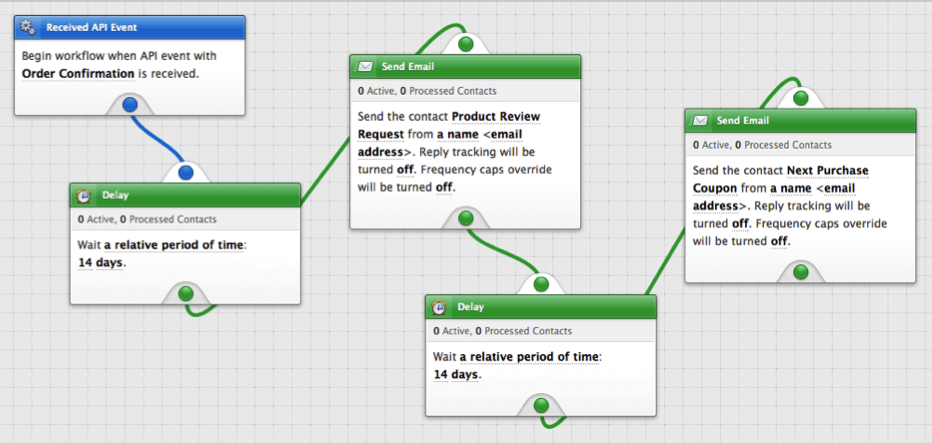
Be sure to use email automation. You can create dynamic, personalized, and highly scalable campaigns that are constantly working for your business in the background, sending personalized and targeted offers, nurturing leads, and much more.

post-purchase-automated-email-workflow

Sample Post-Purchase Automated Email Workflow (Image Credit)

So, while email marketing might not sound as sexy as the latest social media channel, it has a far wider reach, generates higher click-through rates, and offers greater total ROI than almost any other tactic.

Myth #5: Our site looks great, so our work is done.

Yes, you’ve developed a great-looking new site. Your colleagues and staff told you so.

You spent a long time crafting the copy. You think you could sell ice to Eskimos.

All done? Quite the opposite, in fact. Now the work really begins.

If you aren’t expecting to have to consistently create and promote great content and find ways to engage your target customer through a variety of channels outside your site to build traffic, the investment your company made in a pretty new site could be for nothing.

Readers of this blog know it’s not easy to build meaningful, lasting traffic. It’s time-consuming. So make sure you have allocated the time and budget to consistently execute a long-term marketing strategy.

And that’s not all. At the same time, you need to be constantly gathering, filtering, and acting on all the quantitative and qualitative data that allows you to start optimizing your site to better achieve your business goals, because the ROI on your traffic-acquisition efforts depends on the ability of your website to convert this traffic.

Don’t bet that your website is a traffic-magnet, conversion-sucking machine on day 1.

There is no shortage of tools that can help you gather and analyze data and assist you with your marketing, yet it’s alarming how many marketers are still relying on intuition. Click the graphic for 1,876 of them:

marketing-technology-landscape

At least make sure you’ve got some of the basics covered:

*Offers at least a limited free plan. Others offer a free trial.

Track. Analyze. Optimize. Repeat.

Myth #6: “X” worked for that company, so it will work for us, too.

Just because something worked for one company doesn’t mean that it will work for yours. Copying the Amazon.com website doesn’t make you Amazon.com. Even copying the placement of their search bar doesn’t mean it will work as well on your site.

me-infographic

This image is less than ⅓ of the Amazon Fire HD product page. The full page at actual size would be over 27 feet tall.

Would that work for everyone? Nope.

And selling a pair of shoes, plus donating a pair to charity, does not make you the next TOMS.

Unfortunately, you can’t just “borrow” ideas from other sites and expect the same results. Why? Because that company isn’t your company.

Your audience is different. Your value proposition is different. Other elements of your site are different. The industry landscape is different. Readers of this blog know that “best practices” don’t apply to everyone.

However, that doesn’t mean you have to constantly reinvent the wheel, because there are tried and true design elements, functionality features, and marketing methods that are a great starting point. It just means that, even if you see a design or marketing tactic working for a comparable company in your industry, it’s likely going to need tweaking before you can apply it to your own business.

Create a hypothesis. Then test and measure everything.

Myth #7: Everyone is using social media marketing, so our company needs to as well.

cia-tweet

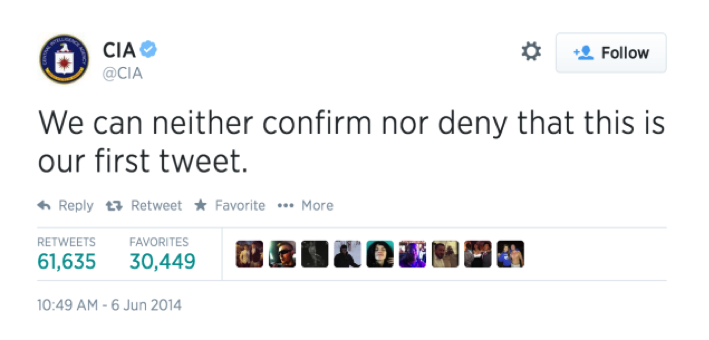
Some businesses feel the need to be on Facebook, Twitter, Instagram, Pinterest, LinkedIn, and Google+, not to mention Vine, Snapchat, Tumblr, and every other social media platform they can think of. It can’t hurt, right?

Not only might these channels not be where your target audience actually spends their time, but every time you create a profile, you’re committing yourself to both monitoring it and keeping it active. After all, what good is having a Facebook page when a customer or prospect sees your last post was in 2009?

Jumping on too many social channels is a waste of valuable time and resources. Figure out which platforms your target audience actually uses, and focus on those by actively participating and creating relevant, frequent content. Forget about the others. If you can’t do them right, you’re better off not doing them at all.

Myth #8: We can hire people to perform individual marketing tactics without a holistic strategy.

A modern online marketing strategy is not comprised of individual tactics executed independently. Rather, it involves a comprehensive approach, including:

  • Finding and engaging your target audience wherever they may be online.
  • Retaining their attention by creating a variety of touchpoints to reinforce your brand and credibility.
  • Leading them through the sales/conversion funnel.

That is why it is so important to take a holistic approach to your marketing campaigns, ensuring that each component, including SEO, email, social media, content marketing, PPC, and more (and each person responsible for it, if you have a team), supports and empowers the others.

For example, a high quality blog helps your SEO, but also gives you quality content to share on social media and through your emails. And using the blog to leverage your position as a thought leader and authority can improve your website conversion rates, which increases the ROI on your PPC and all other marketing.

Performing marketing tactics independently without a cohesive strategy is like telling a basketball team they aren’t allowed to pass. Expecting each player to score on their own without allowing them to leverage the other assets on the court is not going to win you any games against a decent competitor.

Takeaway

Online marketing is a never-ending task. And anyone responsible for it, from an individual at a small company to a C-level executive leading a department, always wishes there were more hours in the day.

So it’s essential to stay focused on what will truly impact ROI. Knowing which tactics and strategies are a waste of time is as important as knowing which ones are crucial to pursue.

Hopefully, I’ve finally killed some of the persistent myths that result in unrealistic expectations and wasted efforts. If you’ve got any others to share, be sure to comment below.

About the Author: Michael Epstein founded an ecommerce business 15 years ago in his college apartment with $500, and generated over a million dollars in sales the first year. He continued to grow his company until it was acquired in 2013. He now advises other online companies, from startups to $100M+ retailers, on digital marketing strategy. Follow him on Twitter and LinkedIn, or visit his blog.

There is No Fold

There is no fold
I know why you’re here, Neo. I know what you’ve been doing… why you hardly sleep, why you live alone, and why night after night you sit by your computer. You’re looking for the fold. I know because I was once looking for the same thing.

There are some questions that just don’t have simple answers. It’s the question that brought you here. You know the question, just as I did: Where is the fold?

The answer is as difficult to answer as it is to enjoy either of the sequels to the Matrix. But that’s what we’re here for. We answer the tough questions, folks.

The answer is: There is no fold.

This is your last chance. After this, there is no turning back. You exit this page — the story ends, you wake up in your bed and believe whatever you want to believe. You keep reading — you stay in Wonderland and I show you how deep the rabbit-hole goes.

What is the fold?

In the days before the machines took over, folks got their news from something called a newspaper. Perhaps you’ve seen them in old movies. Most newspapers were printed in a format known as broadsheet, which is typically 22 inches high. In order to display newspapers without taking up a ton of room on a newsstand, the papers were folded in half.

The term was later borrowed by web designers. Now “above the fold” is any part of a website or landing page that you can see without having to scroll.

The Matrix: Resolutions

There is no fold. Not in the way there used to be.

Designers used to argue about whether to design for 800×600 or 1024×768. The fold was a static dimension, like on a newspaper.

mjproof1

But things have changed. Chris Goward from WiderFunnel sent us a screenshot that demonstrates the variety of screen sizes that visit his website.

device-size-fold

This is why there is no fold. People access the web on so many different devices with so many different screen sizes now that to design for just one size severely inhibits your ability to create landing page experiences that are both successful and delightful.

the-fold-mobile-responsive

The fold can no longer be defined by a predetermined number of pixels — the fold is defined by the device used to visit your page.

Respond with responsive design

Many landing pages are still stuck in the Matrix, prisoners of a paradigm from the past, existing only to serve the search engine machine overlords.

In other words, people still aren’t optimizing their landing pages for mobile devices.

The only way to respond, the only way to break free of a construct that keeps your landing pages from persuading people to convert is through responsive design.

Here’s a responsive page from GigSalad. On my 27-inch monitor, it looks like this:

Desktop above the fold
Click for full-length image.

Everything I need to know about their offer is right here in front of me. They provide everything I need to make a decision; all the context I need to understand what their product is and why I would use it.

Between this size and a smartphone there are several different breakpoints, but by the time you get down to 320×568 (the screen size of an iPhone 5), you can see that a lot of that real estate has gone. This is when clarity and concision are as important as ever.

smartphone-fold

In the mobile version of the page, GigSalad strips down the page content to a bare minimum: they keep their CTA front-and-center along with a very strong value proposition (they can help you get booked for events near you).

You know exactly what you’re in for when you click that “Get Started” button.

the-fold-call-to-action

But keeping your CTA above the fold on any device isn’t a hard-and-fast rule. As with most rules, there are exceptions.

As Chris Goward says:

The conversation about the fold has often centered around the call to action. Most people have assumed the button needs to be above the fold to maximize your conversion rate.

As always, you’ve got to test different configurations to find the one that will work for your visitors.

What you’re really trying to do is give your visitor the motivation to convert — regardless of the device they’re using. You can get them to click the CTA right away if you have given them the information they need to be motivated to do so.


Give your landing page visitors enough info to *need* to click your CTA button.
Click To Tweet


Free your mind

You are the One. You can remake landing pages to be displayed the right way on any device as you see fit. You can make your copy relevant to your audience and clear enough for them to understand. You can remake the fold to display properly to any reader on any device.

Landing pages are similar to the programmed reality of the internet. They have the same basic rules, rules like clarity. Some of them can be bent. Others can be broken. Understand? Then convince your audience to take action and make use of that very valuable space above the fold — wherever it may be.

As you begin to more fully understand your audience, you can adapt and improvise, making your message even more enticing.

Am I trying to tell you that you can dodge bullets? I’m trying to tell you than when you’re ready, you won’t have to.